JeremyPerson.com
-My Corner of the Web
User's Online 
6 People Online Now

The Shutdown And The Deficit: We’re In Trouble

April 9th, 2011 by Jeremy

Nelson Hsu/NPR/Data via CBO

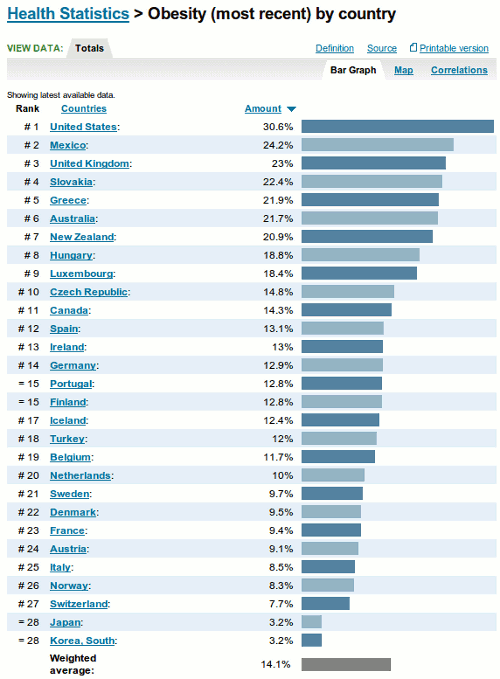
If we are having a difficult time cutting 35 billion, we’re really in trouble.  NPR story here.

Posted in In the News | No Comments »

Humans Are The Routers

February 27th, 2011 by Jeremy

Two very important quotes in this article which may have forever changed the way I think about the Internet and communications. To give you context in case you don’t know, routers control Internet traffic throughout the world (which is why Cisco became a dot com darling). Because we are still dependent on routers, dictators can kill communication in their country by telling ISPs to shut down. Give people access to information and give them a voice and amazing things happen.

  • “I was sitting in front of Secretary Clinton and when she asked me a question I said, “Secretary Clinton, the last bastion of dictatorship is the router.” That night seeded some of the ideas that were core to Secretary Clinton’s important Internet Freedoms Speech on January 21, 2010.”
  • “Free communications is an essential human right. The 21st Century will be defined by the idea that no Government, no power shall ever block or filter the right of all men and women to communicate together again.”

Posted in In the News | No Comments »

60 Minutes: Endless Memory Segment

December 30th, 2010 by Jeremy

I love 60 Minutes and now that I am in my thirties I’m surprised I ever started watching the television series because growing up I used to despise it.  The show came on Sunday nights and I still to this day remember my parents watching it every week.  Seeing that ticking stopwatch gave me that sinking feeling we’ve all had at one point or another of having to go to school.  For me that sinking feeling seemed to happen daily but especially on Sunday nights when that darn 60 Minutes stopwatch would come on. Ironically I’m a huge advocate of the show now and even on my last trip up to see my parents last week the conversation of something I saw on 60 Minutes came up and I continue to encourage them to watch it.  I think I keep saying something like “it is one of the best shows on TV, how can you not watch it?”.

I am at home sick today because I’ve been fighting a cold and I’ve found being able to rest up for a day does miracles for my body so I don’t have to fight a cold longer than I have to.  So as I am cooped up inside the house today I have been clearing off my DVR and I had three 60 Minutes shows saved. The show I’m about to blog about is titled “Endless Memories” and it is about people who have superior autobiographical memories which essentially means they can remember their lives like they are played back on a DVR.  They can recall an event and tell you what day it happened or you can give them a date and they can tell you what happened on that day.  It is pretty remarkable and it was a fascinating segment.

I remember going to college at night after I got off work from my first desk job in Maryland to finish my Associates Degree for Computer Science (after changing from Small Business Management). I was taking a speech class at my old high school and I remember the professor of the class being young and engaging.  I loved the way he taught the class.  You can all remember some of your favorite teachers and professors and this particular speech professor still to this day is one of my favorite.  I remember doing one of my speeches on the power of the mind and I mention this because the mind has always intrigued me.  There are around 7 billion people living on this planet and it has always fascinated me to think how different yet similar we all are and how we think.

I liked the part where they started to analyze how people with superior autobiographical memory’s brains worked because it allowes us to start to see how we may have the same ability buried within our own minds.  I’ve always (here is an example) said you know you’ve had a good day when you will be able to remember it on your death bed.  What is interesting is they talked about traumatic events like 9/11 where I (like you) can remember exactly where I was the moment I heard about the attacks.  I can remember everything very vividly .  I can remember what car I was in, where I was, who I talked to about it, I can remember a lot, and it was years ago.  Same thing with painful and fond memories, I can very vividly remember things that happened for those days.

The other interesting thing is part of the reason I love blogging so much is I use my blog as a “second brain”.  If I want to recall something I’ve found interesting, or if I simply want to record an event, I know I can go to my blog to document or retrieve it.  An example of just that is the link I provided in the third paragraph where I gave the definition of a what I think constitutes a “good day”.  What is fascinating to me is how the 5 people in the interview are able to not only recall events, but tell us what day of the week, month, and year it occurred.  As detailed as my memory is about the morning of 9/11, I can’t even begin to tell you what day of the week it was yet those with autobiographical memory can rattle it off like it is common knowledge.

Then what I like about the segment is it asks “is it a bad thing to not be able to forget”?  We’ve all been through things that we likely want to forget but if you have a superior autobiographical memory you can’t forget things as easily as the rest of us are able to.  I know my mind forgets things very easily which you may find funny but I don’t mean it to be.  If someone isn’t kind to me for whatever reason it doesn’t take long for me to just brush off the event and overlook it.  I can’t say I completely forget what is said or done but I’d almost describe what my brain does as “it just forgives” very easily.  It isn’t something I consiouscly have trained myself to do, I would just say it is how I am.  It is a struggle for me to remember what I did the previous day, the previous week, and especially the previous year.  I just live life and I can’t easily remember the past as easily as just living the present which is what I tend to do if you know me well.

Einstein was one of the greatest geniuses to have ever lived and it is well known as a child he wasn’t thought of “as an Einstein” as he was slow to verbalize his thoughts and he was quite rebellious.  Einstein’s brain was so envied, upon his death an autopsy removed his brain for further study.  It was interesting to learn that it appears his brain was removed without permission from his family for study.  If you want a really interesting tidbit, I learned they even removed his eyes.  I like learning about Einstein because I’m interested to see if people’s brains evolve over the course of their life.  We all change who we are and how we think throughout our lives, but what would be interesting to find out is how the brain changes physically over time and how those changes may impact our ability to think and process information differently.

I have never been exceptional at puzzles, word games, or games in general, and I definitely enjoy some games more than others.  For instance I am absolutely terrible at Scrabble but if you play me at Connect Four or checkers, chance are I can do really well.  Christina started to teach me chess and I also like that game, but it is a game I can tell you need to grow into over time and I really like playing that with her because she can easily beat me but it is the type of game I enjoy playing (even if I have to lose while doing it).

One thing my brain has always been good at is “thinking big” and I know that isn’t a good description, but it is just how I would describe it.  I have never liked getting into the details of things if I don’t have to.  I just want to have my mind up the clouds to solve really big problems and for some reason I don’t think of big problems as unresolvable, they are just problems I haven’t been able to figure out yet.  That isn’t me saying “oh I’m so smart”, it is just me saying it is just what comes naturally to me.  I’m also terrible, and I mean terrible at memorization.  In middle school my sister and I went to Awana which is essentially a youth church group if you haven’t heard of it.  In my particular church they hounded us to memorize and recite verses and to me it was really important to be able to because after reciting the verse they would let us go outside and play organized games.  The games were usually physical (relay races, foursquare, whatever) and I always dominated and thus had fun playing those games but it was only after I struggled to recite the verses.  Now looking back what that church did wasn’t malicious but they just didn’t understand some kids aren’t dumb, they just can’t remember things like others can. Similarly, some kids are just naturally more athletic, good looking, whatever than others yet we all hold each other to certain standards don’t we?  However there were other instances like in High School Biology class where the teacher called on me to answer a question and I remember literally reciting the definition of something straight from the Biology book I read the previous night (to the amazement of everyone…including myself) so I know I can memorize some things but then really struggle to memorize others.

I wouldn’t say my sister has a superior autobiographical memory but my family used to lovingly tease her because when we would come home from school my mom would ask us how our days were.  I would typically say something like “it was good” and then go about doing something else but my sister would stay downstairs and literally recite every conversation she had from the time she left the house to the time she got home over the course of the next hour.  At my first desk job in Maryland I had a boss who wasn’t the most gracious and forgiving person.  She used to say (in front of the other co-workers) that I had a “two second memory”.  What she meant by that was when she would tell me to do something I would forget two seconds after hearing it.  Now how she went about giving me that feedback wasn’t ideal and that is on her, but what I can tell you is because she did give me that feedback, it provided me the initiative to learn to overcome how I think and remember to do things.  I’ve become a “list person” and I literally have a list for everything substantial I do in life which seems to help keep me organized.

I also liked the part where they talked about how having a superior autobiographical memory affects a person’s ability to love because only one of the 5 people interviewed had been married and has two children (although she is on her third marriage).  Christina called me this morning and said she had watched Doctor Oz and they were talking about ADHD.  Now of all the people I’ve ever known, and certainly loved, let me say Christina seems to understand me the best.  I think she and I would both agree we are the most unlikely of pair but we just seem to work, we just seem to understand one another, and it has been that way almost from the start. She lovingly calls me the Absent Minded Professor (which you should know I don’t mind and actually kinda like) so almost everyone I’ve ever known has noticed something different about who I am and how I think, but she is one of the first to not only accept it, but find it endearing.  So I got somewhat off topic there for a moment.  So she calls me and says Dr. Oz had a quiz to see if a person’s mate has ADHD.  She mentioned ADHD is typically more common in men than women so when they had the quiz she took it for me and she thought I had ADHD symptoms. Even if I have “ADHD” I would say I like the brain I have and I wouldn’t say I would necessarily change it.  There are lots of people who take medication to change who they are and in my instance I may have ADHD tendencies but it is who I have come to be and I have learned to leverage it and learned ways to circumvent most shortcomings of it.  Oh and I would also say my thinking never really slows down, it is always processing and thinking of things, it is just always on and it is always full throttle.  I love my Christina, she understands my crazy thinking!

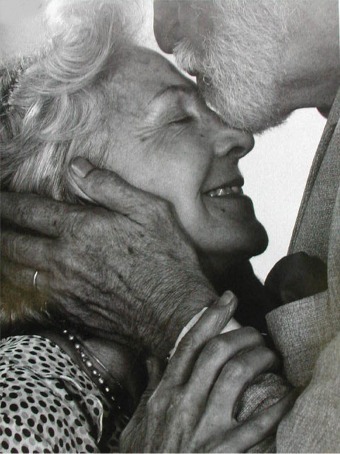
So as much as I said in this post, I guess I’d like to summarize this discussion by saying everyone is different.  All 7 billion of us human beings are different.  We all think different and I sincerely think that is what makes life so beautiful.  I hear a lot of people saying one person or the other is “smart” or a “genius”.  I think what they are saying is the people who are smart simply think differently than most which may be true but how does one really define someone being “smart” or “dumb”.  I know people who are “mentally disabled” who have more love in their heart and minds than the most brilliant person, so is the person who is brilliant smart, or is the person who loves more smart?  I don’t think we can really define smart because we are all just different and as frustrating as it can be to understand how different we all are, some day I hope we all can find a way to understand and accept one another for who we all are.  Not that I’m trying to get the world to come together and sing kumbaya, but we even famously labeled a verse in the Bible as “the golden rule”.  That golden rule teaches us to “do unto others as you would have them do unto you” and I think part of that is understanding and accepting we are all different and it is beautiful.

Have you found your brain perceives the world differently than others?  Do you find your brain works differently?  Share…

Posted in In the News | No Comments »

iPad Opens World To A Disabled Boy

October 31st, 2010 by Jeremy
Michael Nagle for The New York Times

Michael Nagle for The New York Times

“OWEN CAIN depends on a respirator and struggles to make even the slightest movements — he has had a debilitating motor-neuron disease since infancy.  Owen, 7, does not have the strength to maneuver a computer mouse, but when a nurse propped her boyfriend’s iPad within reach in June, he did something his mother had never seen before.  He aimed his left pointer finger at an icon on the screen, touched it — just barely — and opened the application Gravitarium, which plays music as users create landscapes of stars on the screen. Over the years, Owen’s parents had tried several computerized communications contraptions to give him an escape from his disability, but the iPad was the first that worked on the first try.  “We have spent all this time keeping him alive, and now we owe him more than that,” said his mother, Ellen Goldstein, a vice president at the Times Square Alliance business association. “I see his ability to communicate and to learn as a big part of that challenge — not all of it, but a big part of it. And so, that’s my responsibility.”

Since its debut in April, the iPad has become a popular therapeutic tool for people with disabilities of all kinds, though no one keeps track of how many are used this way, and studies are just getting under way to test its effectiveness, which varies widely depending on diagnosis.  A speech pathologist at Walter Reed Army Medical Center uses text-to-speech applications to give patients a voice. Christopher Bulger, a 16-year-old in Chicago who injured his spine in a car accident, used an iPad to surf the Internet during the early stages of his rehabilitation, when his hands were clenched into fists. “It was nice because you progressed from the knuckle to the finger to using more than one knuckle on the screen,” he said.

Parents of autistic children are using applications to teach them basic skills, like brushing teeth and communicating better.  For a mainstream technological device like the iPad to have been instantly embraced by the disabled is unusual. It is far more common for items designed for disabled people to be adapted for general use, like closed-captioning on televisions in gyms or GPS devices in cars that announce directions. Also, most mainstream devices do not come with built-ins like the iPad’s closed-captioning, magnification and audible readout functions — which were intended to keep it simple for all users, but also help disabled people.

“Making things less complicated can actually make a lot of money,” said Gregg C. Vanderheiden, an engineering professor at the University of Wisconsin at Madison who has worked on accessibility issues for decades.  Representative Edward J. Markey, a Massachusetts Democrat, who wrote recently enacted legislation that will require mobile devices to be more accessible to users with disabilities, said approximately three-fourths of communications and video devices need to be adapted for blind and deaf people. “Apple,” he said in a statement, “is an outlier when it comes to devices that are accessible out of the box.” The iPad is also, generally speaking, less expensive than computers and other gadgets specifically designed to help disabled people speak, read or write. While insurers usually do not cover the cost of mobile devices like the iPad because they are not medical equipment, in some cases they will pay for the applications that run on them.

In Owen’s case, his grandmother bought him a $600 iPad in August, and his parents have invested about $200 more in software. One day this summer, his finger dangled over the title page of “Alice in Wonderland” on his iPad while his mother hovered over his shoulder in their Brooklyn home. Then, with the tiniest of movements, and thanks to the sensitivity of the iPad’s touch screen, Owen began to turn the pages of the book. “You are reading a book on your own, Owen!” Ms. Goldstein, 44, exclaimed. “That is completely wonderful.”  But while the sensitivity of the iPad’s touch screen makes it promising for Owen, it can be problematic for others, like Glenda Watson Hyatt, a blogger in Surrey, British Columbia, who has cerebral palsy. “When ‘flipping’ screens, sometimes I flip more than one screen,” Ms. Hyatt wrote in an interview conducted by e-mail. “Or I touch what I didn’t intend to.”

Still, Ms. Hyatt said that when she was having trouble chatting with friends at a bar recently, she pulled out her iPad to help communicate and felt normal. “People were drawn to it because it was a ‘recognized’ or ‘known’ piece of technology,” she wrote in a blog post reviewing the device.

At the Shepherd Center, a spinal cord rehabilitation clinic in Atlanta, some teenage quadriplegics have received iPads as gifts, but they do not work well for those who rely on a mouse stick — basically a long pen controlled by mouth.  “It wants to see a finger,” said John Anschutz, the manager of the assistive technology program at Shepherd. “It really requires the quality of skin and body mass to operate.”  For Owen Cain, whose disease is physical, not mental, the iPad has limitations, too. Moving his finger all the way across the keypad remains a challenge, and makes writing difficult. Ms. Goldstein said its versatility and affordability, though, were a boon. He has been experimenting with a variety of applications — Proloquo2Go, which allows him to touch an icon that prompts the device to speak things like, “I need to go to the bathroom”; Math Magic, which helps him practice arithmetic; and Animal Match, a memory game.

“If all you’re worrying about is ‘I can try this program, or I can try that program, I can buy that app or I can buy this app,’ and the investment is so much lower,” his mother said, “then our ability to explore or experiment with different things is so much bigger.”  When Owen was about 8 weeks old, his mother noticed his right arm drooping. It led to a crushing diagnosis: the motor-neuron disease known as spinal muscular atrophy Type 1. A 2003 New York Times article about spinal muscular atrophy said his parents had been told Owen would be “paralyzed for his life, which doctors predicted would last no more than about two years.”  Owen will turn 8 on Nov. 11. While his condition is not expected to worsen, he is extremely sensitive to infection and once nearly died of pneumonia; three specialized therapists and a nurse help keep him alive.

Though he cannot speak, his parents have taught him to read, write and do math. He has an impish sense of humor and a love of “Star Wars.” “He’s a normal child trapped in a not normal body,” said his father, Hamilton Cain, 45, a book editor.  Since he received the iPad, Owen has been trying to read books, and playing around with apps like Air Guitar. And, one day, he typed out on the keypad, “I want to be Han Solo for Halloween.”

Source: http://www.nytimes.com/2010/10/31/nyregion/31owen.html

Posted in In the News | No Comments »

Driver Thanks Man Who Hit Him On Purpose

October 24th, 2010 by Jeremy

Photo Courtesy of Jim Bates / The Seattle Times

By Sean Collins Walsh
Seattle Times staff reporter

“Bill Pace, left, meets Duane Innes for a thank-you dinner at a Bellevue restaurant Monday. On July 23, Pace slumped over the wheel of his truck and Innes engineered a crash to stop the truck.  “For all the good that he’s done, he’s probably deserving of a few extra lives,” Innes said of Pace.  Driving to a Mariners game, Duane Innes saw a pickup ahead of him drift across lanes of traffic, sideswipe a concrete barrier and continue forward on the inside shoulder at about 40 mph.  A manager of Boeing’s F22 fighter-jet program, Innes dodged the truck, then looked back to see that the driver was slumped over the wheel. He knew a busy intersection was just ahead, and he had to act fast. Without consulting the passengers in his minivan — “there was no time to take a vote” — Innes kicked into engineer mode.

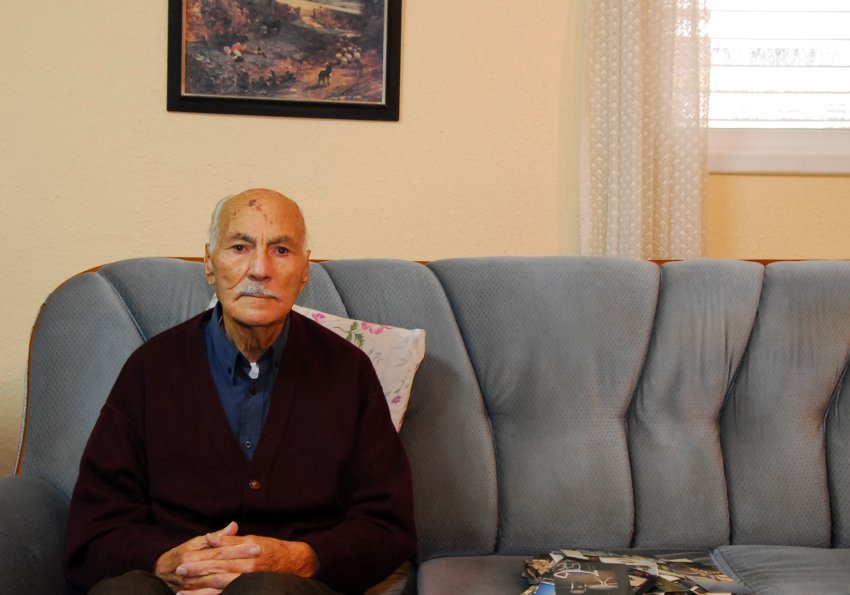
“Basic physics: If I could get in front of him and let him hit me, the delta difference in speed would just be a few miles an hour, and we could slow down together,” Innes explained.  So he pulled in front of the pickup, allowed it to rear-end his minivan and brought both vehicles safely to a stop in the pull-off lane.  Some might say the driver of the truck, 80-year-old Bill Pace, of Bellevue, and anyone Pace’s truck might have slammed into had luck on their side that day. A retiree who volunteers for Special Olympics and organizes food drives, Pace didn’t know it at the time, but he’d had a minor heart attack two days earlier and his circulation was so poor he passed out at the wheel with his foot resting on the accelerator.

But those who know Pace best don’t see his rescue as luck so much as an example of “what goes around comes around.” And Innes, who met Pace for the first time since the incident over dinner with their wives Monday night at a Bellevue restaurant, believes that, too.  “For all the good that he’s done, he’s probably deserving of a few extra lives,” said Innes, who talked for hours with Pace about their shared interest in aviation and their family ties to Yakima Valley.  State Farm, Pace’s insurance company, covered the roughly $3,500 in damage to Innes’ car, and a claim representative sent Innes a letter of appreciation this summer.  “We wish to thank you for the actions you took to save Bill’s life,” State Farm’s Clayton Ande wrote. “State Farm and the Pace family consider you to be a hero. I wish there were more people like you in the world.”

>> Full Story

Posted in In the News | No Comments »